Search has changed. People still type queries into Google, but they also ask ChatGPT, Perplexity, Gemini and Google's AI Overviews, and they expect a direct answer instead of ten blue links. That shift has produced a wave of new acronyms: SEO, AEO, GEO, AIO and SXO.
They can sound like competing strategies. They are not. Each one covers a different moment in the same journey, from being found, to being quoted, to being chosen. This guide explains each term in plain language, shows how they fit together, and gives you a checklist you can apply to your own website.
The five terms at a glance
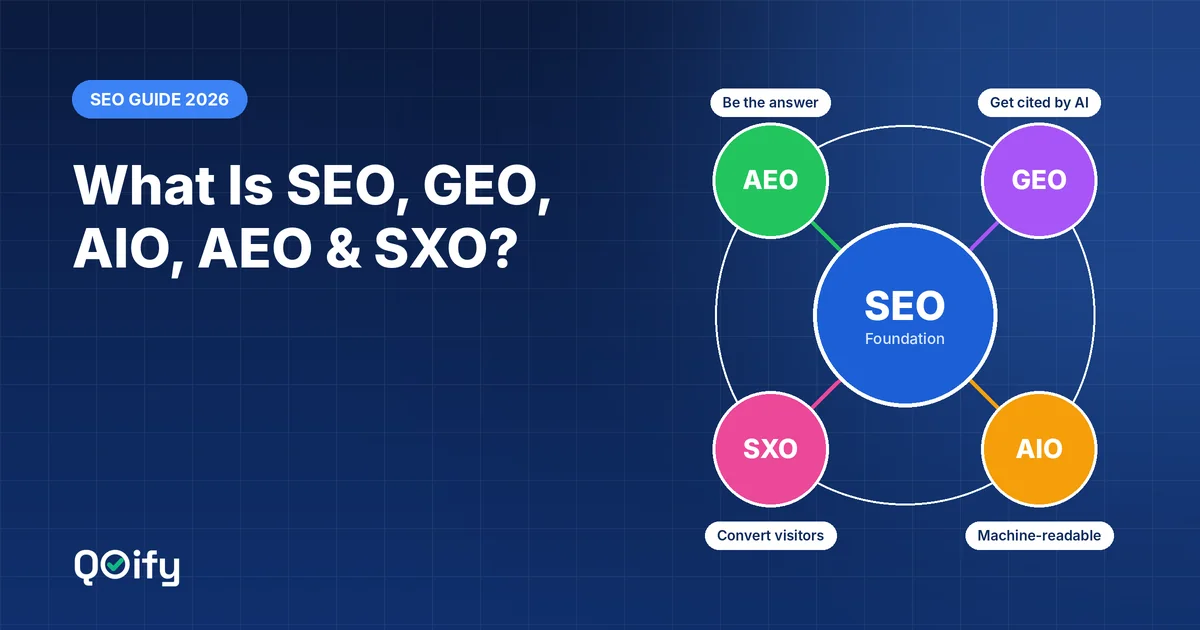
| Term | Stands for | Main goal | Where you show up |
|---|---|---|---|
| SEO | Search Engine Optimization | Rank pages in search results | Google and Bing results pages |
| AEO | Answer Engine Optimization | Be the direct answer to a question | Featured snippets, "People also ask", voice assistants |
| GEO | Generative Engine Optimization | Be cited inside AI-generated answers | ChatGPT, Perplexity, Gemini, Copilot, Google AI Mode |
| AIO | AI Optimization (also: AI Overviews optimization) | Make content easy for AI systems to understand and reuse | AI Overviews and every AI assistant |
| SXO | Search Experience Optimization | Turn search visitors into customers | Your own website, after the click |
A simple way to remember it: SEO gets you found, AEO and GEO get you quoted, AIO makes you machine-readable, and SXO makes the visit worth it.
What is SEO (Search Engine Optimization)?
SEO is the practice of improving a website so search engines can crawl it, index it and rank it for relevant searches. It is still the foundation for everything else in this article, because AI search tools frequently pull their sources from pages that already rank well in traditional search.
SEO has three classic pillars:
- Technical SEO – fast loading, mobile-friendly pages, clean URLs, a valid sitemap, correct canonical tags, HTTPS, and no crawl errors.
- On-page SEO – content that matches what the searcher wants, a clear title tag and meta description, logical headings, internal links and descriptive image alt text.
- Off-page SEO – links and mentions from other trustworthy websites, which act as votes of confidence.
Success in SEO is measured with rankings, impressions, clicks and organic traffic, mostly in Google Search Console and your analytics tool.
What is AEO (Answer Engine Optimization)?
AEO focuses on a narrower goal: becoming the answer rather than one of many results. When someone asks a question, Google may show a featured snippet at the top of the page, a "People also ask" box, or read a single answer aloud through a voice assistant. AEO is about earning those spots.
Answer engines favour content that:
- States the answer immediately. Put a clear one or two sentence answer directly under the question heading, then expand on it.
- Uses question-shaped headings. Headings such as "What is AEO?" or "How long does SEO take?" mirror the way people actually search.
- Uses lists and tables for steps, comparisons and definitions, which are easy to lift into a snippet.
- Adds structured data such as
FAQPage,HowToandArticleschema so machines understand the page's purpose.
The test for AEO is simple: if someone read only the first two sentences under each heading, would they have a correct, complete answer?
What is GEO (Generative Engine Optimization)?
GEO is about being cited by generative AI. Tools like ChatGPT search, Perplexity, Microsoft Copilot, Gemini and Google's AI Mode write a fresh answer for each question, then show a handful of sources. GEO is the work of making your page one of those sources, and making sure the AI describes your brand accurately.
Generative engines typically retrieve a set of relevant pages, read them, and synthesise an answer. To be selected and quoted, your content should be:
- Easy to extract. Short, self-contained paragraphs that each make one clear point are easier to quote than long, winding ones.
- Specific and verifiable. Concrete numbers, named methods, dates and examples give an AI something worth citing. Always link to the original source of a statistic.
- Clearly attributed. Show the author, their expertise and when the page was last updated.
- Readable without JavaScript. Many AI crawlers do not run JavaScript. Pages served as plain HTML (as static sites built with tools like Astro are) are read completely.
- Accessible to AI crawlers. Check that your
robots.txtdoes not block bots such asGPTBot,OAI-SearchBot,PerplexityBotorClaudeBotunless you mean to. - Mentioned elsewhere. AI systems learn about brands from across the web. Consistent mentions on review platforms, directories, industry publications and communities make your brand an entity the model recognises and trusts.
What is AIO (AI Optimization)?
AIO is the least standardised of the five terms, and you will see it used in three ways:
- AI Optimization (the umbrella). Optimising content so any AI system can understand, trust and reuse it. In this sense, AEO and GEO are parts of AIO.
- AI Overviews optimization. Specifically targeting the AI-generated summaries Google shows at the top of many search results.
- Using AI to optimise. Using AI tools to research keywords, draft outlines or audit pages. This is a workflow, not a visibility channel.
Whichever meaning you use, the practical work is the same: clear entity information (who you are, what you do, where you operate), consistent structured data, well-organised headings, and content that answers questions without ambiguity. An llms.txt file, a plain-text map of your most important pages for AI tools, is an emerging and low-cost addition, although support for it varies between AI providers.
What is SXO (Search Experience Optimization)?
SXO combines SEO with user experience (UX) and conversion optimisation. Ranking well is pointless if the visitor lands, gets confused and leaves. SXO asks: once someone arrives from search, do they find what they need and take the next step?
Key parts of SXO include:
- Search intent match. Someone searching "SEO agency pricing" wants prices, not a history of SEO.
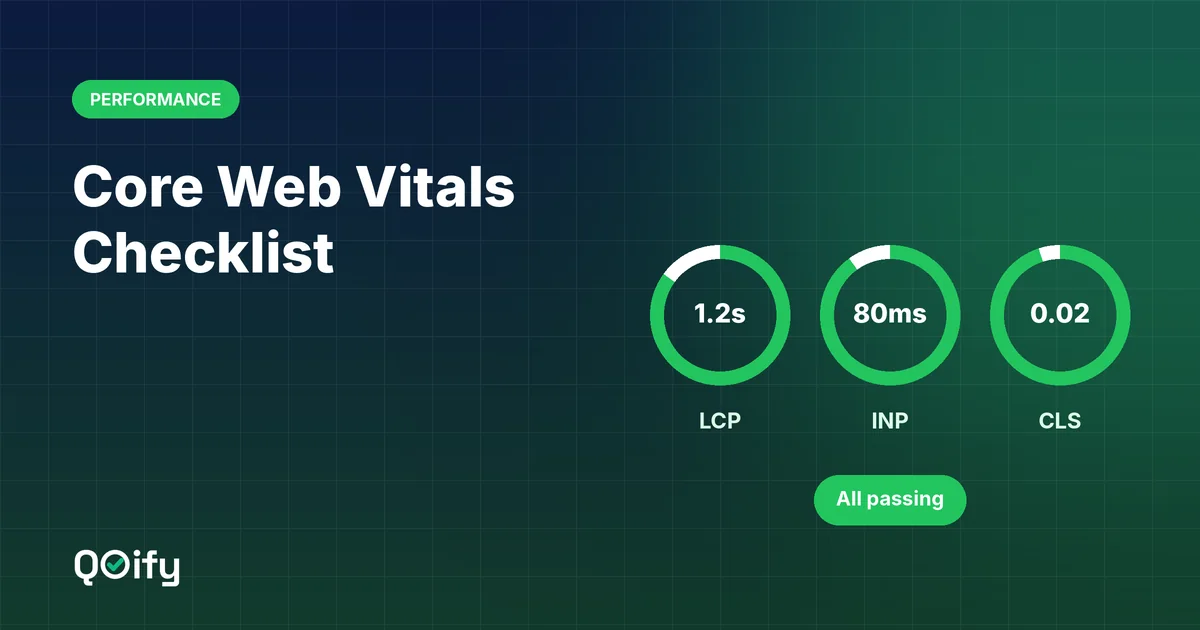
- Speed and stability. Good Core Web Vitals (LCP, INP and CLS) mean pages load quickly, respond instantly and do not jump around.
- Scannable layout. Clear headings, a table of contents, short paragraphs and visual hierarchy.
- Trust signals. Author details, reviews, case studies, contact information and security.
- A clear next step. A relevant call to action, such as reading a related guide, booking a call or downloading a resource.
SXO is measured with engagement and conversion metrics: engaged sessions, scroll depth, leads, sign-ups and sales from organic traffic.
How SEO, AEO, GEO, AIO and SXO work together
Think of them as layers in one strategy:
- SEO is the foundation. If search engines cannot crawl and trust your site, nothing else works.
- AEO shapes the content. Question-led headings and direct answers make each page easy to quote.
- GEO and AIO extend your reach. The same clear, well-sourced content is what AI engines choose to cite, and a strong brand presence across the web helps them trust it.
- SXO converts the visit. Whether someone arrives from Google or clicks a citation in ChatGPT, the page must deliver.
The good news is that most of the work overlaps. A fast page with a clear answer, good structure, a credible author and a useful next step scores well on all five.
Comparison: goals, tactics and metrics
| SEO | AEO | GEO | AIO | SXO | |
|---|---|---|---|---|---|
| Core question | Can people find us? | Are we the answer? | Do AI tools cite us? | Can machines understand us? | Do visitors convert? |
| Key tactics | Technical fixes, keywords, links | Direct answers, FAQ, schema | Citable facts, brand mentions, crawlable HTML | Entities, schema, llms.txt | Intent match, speed, CTAs |
| Main metric | Rankings and organic clicks | Snippets and PAA wins | AI citations and AI referral traffic | Accurate AI descriptions of the brand | Conversion rate from search |
A practical checklist for your website
Technical foundation (SEO and SXO)
- Pages load in under about 2.5 seconds on mobile and pass Core Web Vitals
- Each page has a unique title, meta description and canonical URL
- XML sitemap submitted in Google Search Console and Bing Webmaster Tools
- Important content is in the HTML, not loaded only by JavaScript
robots.txtallows the search and AI crawlers you want
Content structure (AEO and GEO)
- A one or two sentence answer at the top of every article
- Question-based H2 and H3 headings
- Lists and tables for steps and comparisons
- An FAQ section answering related questions
- Statistics linked to their original sources
- A visible author bio and a "last updated" date
Machine readability (AIO)
Organization,Article,BreadcrumbListandFAQPagestructured data- The same business name, description and contact details everywhere online
- An
llms.txtfile listing your key pages
Authority (GEO)
- Profiles on relevant directories and review platforms
- Guest articles, podcasts or interviews in your industry
- Original research or data others will want to reference
Experience (SXO)
- Every page has one clear next step
- Related articles link to each other
- Contact details and trust signals are easy to find
How to measure results
- SEO: impressions, clicks, average position and indexed pages in Google Search Console.
- AEO: which queries show your page in featured snippets or "People also ask" (most rank-tracking tools report this).
- GEO and AIO: referral traffic from AI tools in your analytics (look for sources such as
chatgpt.com,perplexity.ai,gemini.google.comandcopilot.microsoft.com), plus a monthly manual check of how the main AI assistants describe your brand and which sources they cite. - SXO: engagement rate, scroll depth and conversions from organic and AI referral traffic.
Common mistakes to avoid
- Chasing acronyms instead of quality. There is no separate trick for each term. Clear, accurate, helpful content is what every system rewards.
- Blocking AI crawlers by accident. Some security plugins and CDN settings block AI bots by default. Check before wondering why you are never cited.
- Burying the answer. Long introductions before the actual answer hurt both snippets and AI citations.
- Anonymous content. Pages without a named, credible author are harder for people and machines to trust.
- Ignoring the page after the click. Traffic that bounces does not grow a business.
Conclusion
SEO, AEO, GEO, AIO and SXO are not five separate projects. They are five ways of looking at one goal: being the most useful, trustworthy answer wherever people search, and delivering on that promise when they arrive. Start with a fast, technically sound website, write content that answers questions clearly, build a recognisable brand across the web, and design every page around the visitor's next step.